
Protecting Our Digital World: FUJIFILM Tapes Offer Secure, Sustainable Data Storage
In our increasingly data-driven world, a critical question looms large for organisations: How can we securely preserve the exponentially growing volumes of digital information that underpin our economy, culture, and society? The answer lies in a technology that many might be surprised to learn comes from FUJIFILM — advanced data storage tape systems that safeguard exabytes of the world’s most valuable information.
The Modern Data Challenge
We are living through a data explosion of unprecedented scale. Every day, humanity generates approximately 2.5 quintillion bytes of data—that’s 34 million hours of 4K Video Streaming. By 2025, the global datasphere is projected to grow to 175 zettabytes, a nearly tenfold increase from 2018. This tsunami of information includes everything from critical business records and medical data to scientific research and cultural treasures.
Alongside this growth comes escalating threats to data security. Ransomware attacks increased by 150% in 2020 alone, with average recovery costs exceeding $1.85 million per incident. Even with robust cybersecurity measures, organizations face the constant risk of data compromise or loss.
Simultaneously, data centers have become one of the fastest-growing sources of energy consumption worldwide, raising serious environmental concerns. A single data center can consume as much electricity as a small town, with corresponding carbon emissions.
In this challenging landscape, FUJIFILM’s LTO data tape technology offers a solution that addresses security, longevity, and sustainability in ways that might surprise those unfamiliar with modern data storage strategies.
LTO Tape Technology: The Unsung Hero of Data Storage
Linear Tape-Open (LTO) technology represents the culmination of decades of research and development in magnetic storage media. While many associate FUJIFILM primarily with photography, the company has leveraged its expertise in coating and magnetic particle technology to become a global leader in enterprise data storage solutions.
“When people ask ‘What does FUJIFILM make besides cameras?‘, data storage technology is one of our most significant contributions to modern infrastructure,” explains a FUJIFILM data storage specialist. “Our tapes protect many of the world’s most valuable digital assets.”
The Technology Behind the Tape
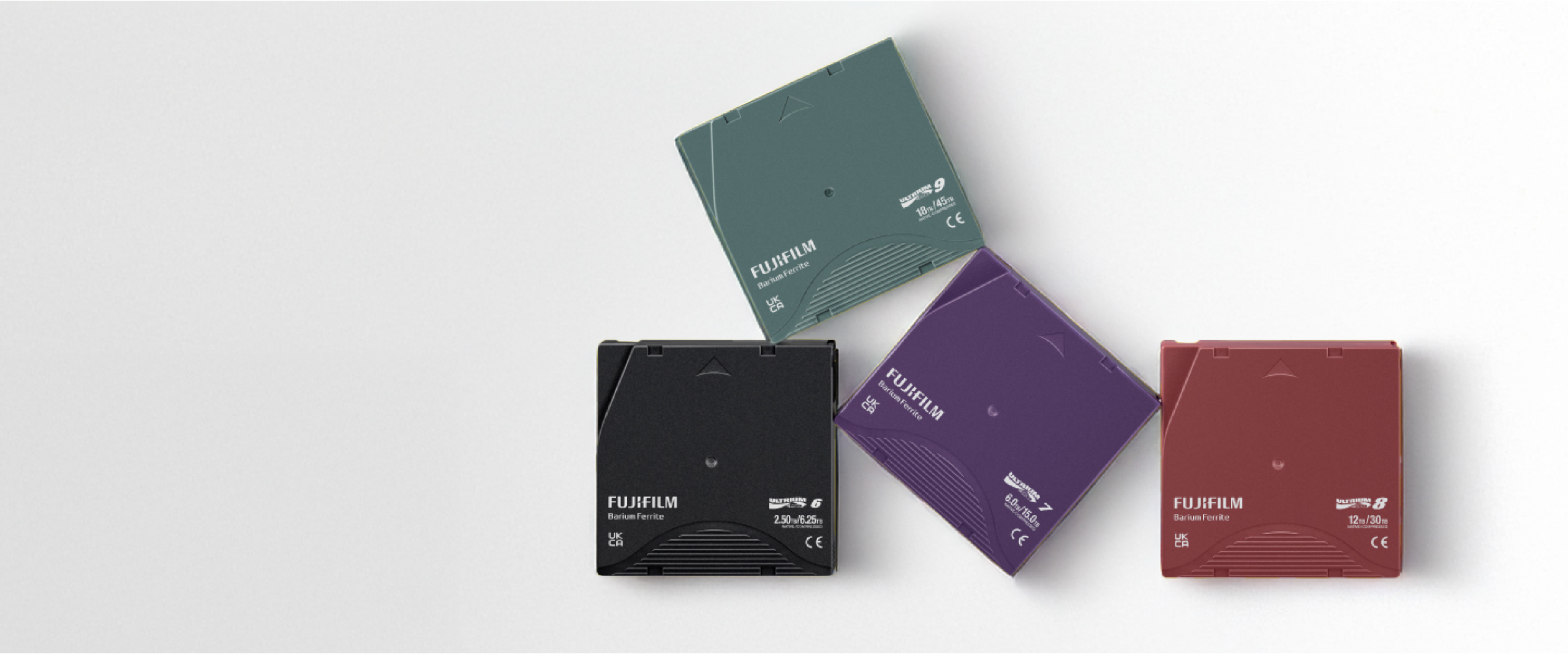
At the heart of FUJIFILM’s data tape technology lies proprietary Barium Ferrite (BaFe) magnetic particles. Unlike traditional metal particles used in older storage media, BaFe offers superior magnetic properties, thermal stability, and corrosion resistance—critical factors for long-term data preservation.
The process of manufacturing these high-precision tapes draws on FUJIFILM’s hidden technology expertise in nanoscale coating and quality control. The company’s advanced production techniques ensure consistent performance across millions of square meters of tape media produced annually.
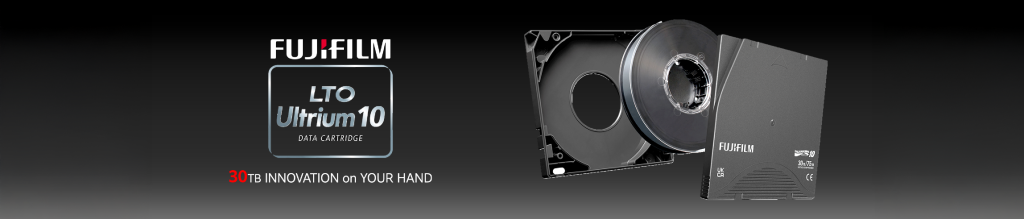
Current LTO-8 tapes can store up to 30TB of compressed data on a single cartridge, with the LTO roadmap extending to 192TB per tape in future generations. This remarkable density means a standard rack of tape drives can store petabytes of information in a relatively small physical footprint.
The Security Advantage: Air-Gapped Protection
In an age of sophisticated cyber threats, tape storage offers a fundamental security advantage: physical separation from networks. This “air gap” creates a barrier that ransomware and hackers simply cannot cross remotely.
“For cost-effective, secure long-term data preservation with a lower environmental footprint, FUJIFILM’s LTO tapes are the industry standard. They are essential to our archival strategy,” notes a Chief Information Officer at a major financial institution. “When data is written to tape and stored offline, it’s effectively immune to network-based attacks—a level of security that’s increasingly valuable in today’s threat landscape.”
This air-gap protection has led to a renaissance in tape utilisation, with major cloud providers and enterprises incorporating tape into their security and disaster recovery strategies. The approach follows the “3-2-1” backup rule recommended by security experts: maintain at least three copies of important data, store them on at least two different types of media, with at least one copy kept offsite.
Longevity: Preserving Data for Decades
Data preservation isn’t just about immediate security—it’s about ensuring access to information over extended timeframes. Here again, FUJIFILM data storage technology demonstrates remarkable advantages.
Modern LTO tapes have an expected shelf life of 30+ years when properly stored, far exceeding the typical 3-5 year lifespan of hard disk drives. This longevity makes tape ideal for long-term archival of data that must be preserved for regulatory compliance, historical value, or future reference.
The stability of the BaFe magnetic particles means data remains readable with minimal degradation over decades. Contrast this with the mechanical components in hard drives that inevitably fail over time, requiring regular migration of data to new hardware—a costly and risk-prone process.
For organizations with statutory obligations to maintain records for extended periods—such as healthcare providers, financial institutions, and government agencies—this longevity translates to greater compliance confidence and reduced data migration costs.
The Sustainability Surprise: Tape’s Green Advantage
Perhaps the most surprising aspect of FUJIFILM’s LTO tape technology is its remarkable environmental profile. In an era of growing concern about data center sustainability, tape storage offers dramatic energy savings compared to always-spinning disk alternatives.
The numbers tell a compelling story:
Up to 30% reduction
Lower emissions footprint
Optimized total cost
Extended durability

These environmental benefits have earned FUJIFILM’s data storage products recognition as “Green Value Products” under the company’s sustainable product certification program.
“What makes tape so environmentally friendly is elegantly simple,” explains a data center sustainability expert. “Once data is written to tape, the media requires no power whatsoever until that data needs to be accessed. Contrast this with hard drives, which must continually spin and consume electricity even when storing rarely accessed information.”
For large organizations with petabytes of “cold” data—information that must be preserved but is accessed infrequently—the energy savings quickly become substantial. A major cloud provider with an exabyte of archived data could save millions of kilowatt-hours annually by utilising tape for cold storage rather than keeping that data on spinning disks.
The Hybrid Approach: Modern Data Architecture
Despite its advantages, tape is not positioned as a replacement for all storage technologies. Instead, FUJIFILM technology impact in the storage domain centers on promoting intelligent, tiered approaches to data management.
Modern enterprise storage architectures typically incorporate multiple tiers:
- Hot data:
Frequently accessed information stored on high-performance flash storage - Warm data:
Less frequently accessed data on hard disk drives - Cold data:
Rarely accessed archival information ideally suited for tape storage
By moving data through these tiers based on access patterns and business value, organisations can optimize both performance and cost while maximising sustainability benefits.
“What’s remarkable about today’s storage landscape is that technologies once viewed as competitors now complement each other in well-designed systems,” notes a storage architect at a global enterprise. “Flash drives provide performance, hard disks offer capacity, and FUJIFILM tapes deliver unmatched economics and security for long-term preservation.”
Real-World Applications: From Business to Cultural Heritage
The practical applications of FUJIFILM’s data storage solutions span virtually every sector:
Enterprise Data Protection
Financial institutions, healthcare providers, and large corporations leverage tape for secure, long-term retention of business records, customer data, and intellectual property. The air-gap protection provides peace of mind against ransomware threats, while the economics make storing years of historical data feasible.
Scientific Research Preservation
Research organisations and universities store massive datasets from experiments, observations, and simulations on tape for future analysis. The Large Hadron Collider at CERN, for example, generates petabytes of data annually, much of which is archived on tape systems.
Media and Entertainment Archives
Film studios, broadcasters, and streaming services maintain vast libraries of content on data tape. Hollywood’s major studios use LTO technology to preserve digital master copies of films and associated production assets, ensuring this cultural content remains accessible for future generations.
National Archives and Cultural Heritage
Government archives and cultural institutions worldwide rely on data tape for preserving digitized historical materials, from ancient manuscripts and photographs to oral histories and documentary records. The stability and longevity of tape provide confidence that these irreplaceable digital artifacts will remain accessible for decades.
Experiencing the Technology: The Dubai Innovation Hub
For IT professionals, data center managers, and technology decision-makers interested in exploring these storage solutions firsthand, the FUJIFILM Technology Centre Dubai offers an informative and interactive experience.
“Visitors to our FTC Experience Dubai can see the actual tape media, understand the manufacturing processes, and explore real-world case studies of organizations benefiting from our storage technology,” explains a center representative. “Many are surprised to discover the sophistication and strategic importance of what appears at first glance to be a simple cartridge.”
The center showcases not only the physical technology but also the broader ecosystem of storage management software, robotic tape libraries, and integration approaches that make modern tape systems both powerful and user-friendly.
Looking to the Future: Innovation Continues
Far from being a legacy technology, data tape continues to evolve through ongoing FUJIFILM. Research teams are exploring higher-density recording methods, enhanced reliability features, and integration with emerging data management paradigms.
The LTO roadmap projects continued capacity increases, with future generations expected to reach capacities of 192TB per cartridge. Additionally, technologies like LTFS (Linear Tape File System) are making tape more accessible by allowing tape media to be mounted and used similarly to traditional disk volumes, broadening the potential applications.
As the value of data continues to grow and environmental considerations become increasingly important, the role of tape in comprehensive storage strategies is likely to expand further.
Conclusion: The Unsung Hero of the Digital Age
While consumers may be more familiar with FUJIFILM’s cameras and photographic heritage, the company’s contributions to secure, sustainable data storage represent one of its most significant impacts on the digital world.
Through its advanced LTO tape technology, FUJIFILM helps safeguard the exponentially growing volumes of information that underpin our economy, preserve our cultural heritage, and advance scientific knowledge. The technology does so while offering compelling advantages in security, longevity, and environmental sustainability.
For organizations grappling with data growth, security threats, and sustainability goals, FUJIFILM data storage solutions merit serious consideration as part of a comprehensive approach to information management. By combining the latest innovations in tape technology with thoughtful data lifecycle strategies, organizations can achieve the optimal balance of performance, protection, and environmental responsibility.
To learn more about how FUJIFILM’s storage solutions could benefit your organisation or to explore the technology in person, consider arranging a visit to the FUJIFILM Technology Centre Dubai. Here, you can discover firsthand how this hidden technology is quietly protecting our digital world for the future.
For more on FUJIFILM’s Data Storage Tape technology, visit fujifilm.com/ae.